Chemical Decantation
Automate the discharge of separated liquid phases in suitable chemical batch and washing duties, with selection based on your process.

Chemical Decantation & Liquid Recovery
Recover Liquids from Batch Operations
Chemical processes may leave two immiscible liquid phases after settling or washing. The Belfield Valve responds to their different specific gravities to discharge the heavier phase and close at the interface. The direction of recovery depends on which phase is the valuable product.
How the Process Works
01
Identify both phases and allow adequate settling.
02
Confirm their specific gravities across the operating temperature range.
03
Select the valve and float arrangement for the complete duty.
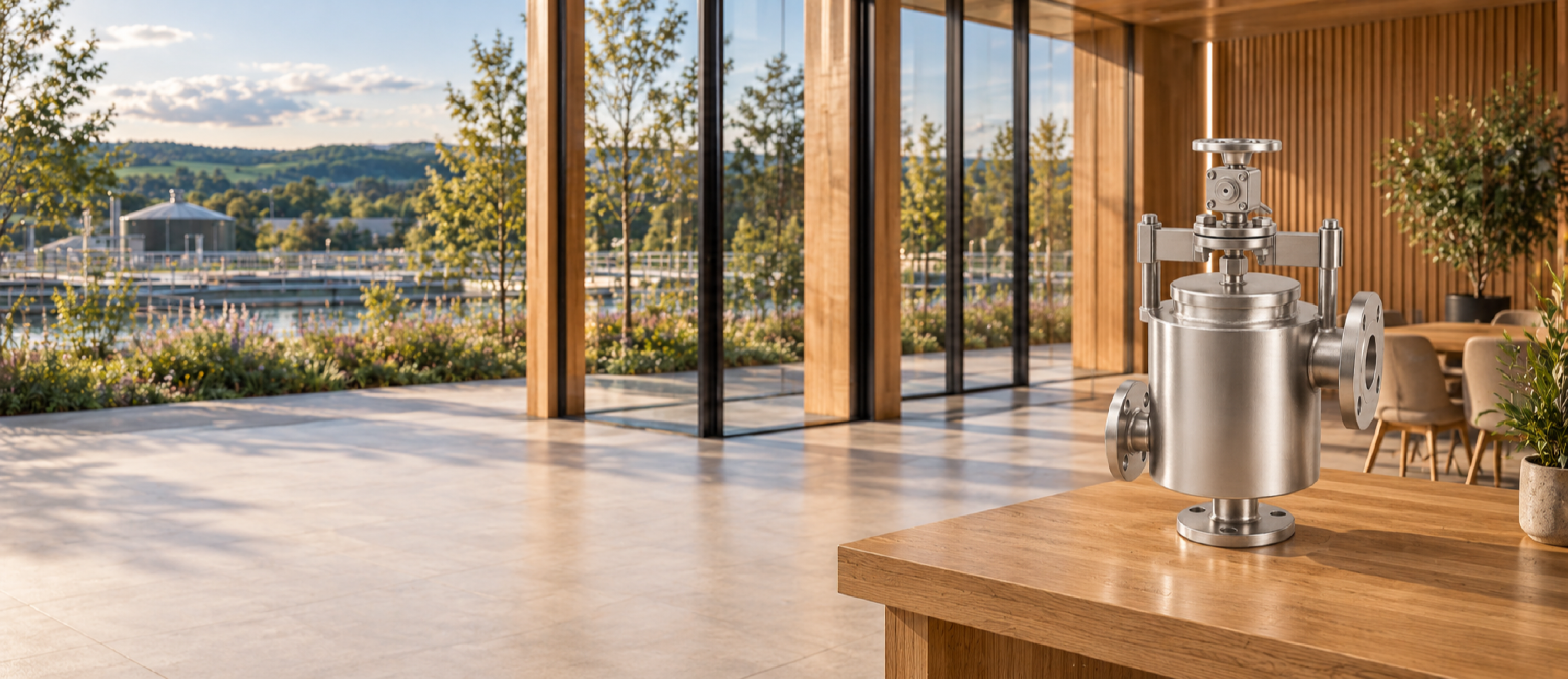
The float responds to liquid density, not colour. The illustration shows the operating principle, not a project-approved chemical installation.
Changing Liquids Need a Fresh Check
A batch vessel may handle several liquid pairs or successive wash stages. A shared valve arrangement may be possible, but only after checking the closest density difference, temperatures, viscosity and materials for every duty. A valve specified for one liquid pair should not be assumed suitable for another.
Compatibility Comes Before Selection
Supply liquid identities, safety data, temperature ranges, density and viscosity information, solids and the proposed pipework. PMA must review wetted materials, seals, pressure and any pumped arrangement. This page does not claim universal chemical compatibility or hazardous-area certification.
Process-Data Checklist
- Liquid identities, density and viscosity at operating temperature
- Minimum, normal and maximum temperature and pressure
- Required flow, available head and downstream conditions
- Solids, emulsions, wax or flashing risks
- Connection sizes, materials and a vessel or P&ID sketch
Common Application Questions
Can it recover the heavier or lighter liquid?
The main outlet discharges the heavier phase. Retaining or recovering the other phase depends on the vessel, side run-off and operating arrangement selected for the process.
Will it work with similar-density liquids?
Close specific gravities, particularly where temperature changes bring them closer together, need application review. Do not treat a nominal density difference as a guaranteed result.
Prepare Your Enquiry
Review the brochure and operating manual, then send your process data and a vessel or piping sketch to PMA.
Related Applications and Guidance
Effluent Protection
Valve Sizing and Selection
Let’s talk about your application.
Speak to the PMA team about your Belfield Valve requirements. Tell us about your liquid-separation duty, and we’ll help you find the right next step.
- Advice for your application. Discuss the liquids, flow rate and operating conditions for your process.
- Practical valve support. Get help with sizing, installation, maintenance and replacement parts.
- Clear next steps. Request a quotation or a callback, with your site and application in mind.
- An enquiry, not a mailing list. Your details are used to respond to your enquiry.
Belfield Valve customers





Prefer to speak with us?
You can also email sales@pma.uk.com.
Tell us how we can help
Share your requirements below. All fields are required.
Your enquiry goes directly to our team. Your details are used to respond to you. Read our privacy policy.